
Services · Preventive Care & Tooth Preservation

Root Canal Treatment

The tooth stays, even when what's inside it is diseased, with an honest answer to the fear people have of it.

Root canal treatment has a bad reputation and a different truth: it saves your own tooth from the inside, when its interior, the pulp, is diseased or has died, and under local anaesthetic it's usually no worse than a larger filling. The pain many people fear is the inflamed nerve before treatment, not the treatment itself.

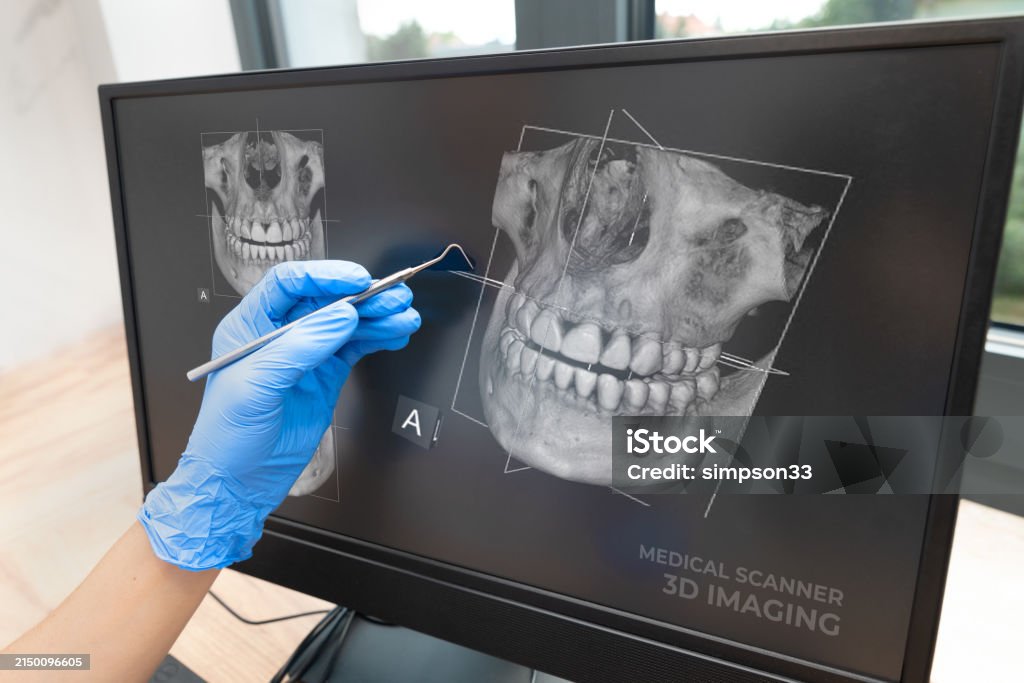
X-ray being reviewed on screen (placeholder image)
We tell you honestly whether root canal treatment is the right fit

of 14 services

Root Canal TreatmentEndodontic Treatment

The tooth that hurts at night, or not at all

A lingering, often nighttime pain, a long-lasting sensitivity to cold or heat, a tooth that hurts when you bite down: these are the signs that deep decay, a crack or an old injury has reached the tooth's interior, the pulp. Most often, deep decay or a large old filling near the nerve is the path there, more under Fillings & Inlays. But there's also a silent version: inflammation at the root tip can be completely painless and then only turns up by chance on an X-ray: no pain doesn't mean no problem here.

How it would work for you

  1. Findings & explanation

    We examine the tooth and take an X-ray, which shows the roots and any inflammation at the root tip.

  2. Anaesthetic

    A local anaesthetic switches off the pain.

  3. Cleaning & disinfection

    The canals are cleaned and disinfected mechanically: traditionally with rinsing solutions, or laser-assisted with two wavelengths.

  4. Root filling & sealing

    Once the canal is clean and free of inflammation, it's densely filled and the access is sealed.

  5. Final restoration

    A root-treated tooth is often more prone to fracture and usually needs a crown afterwards for protection.

Placeholder image

The tooth stays.We don't give it up lightly: it's no worse a choice than any replacement.

What it costs

Root canal treatment is a covered service when the tooth is considered worth saving: for front and forward molars, usually straightforward. A special rule applies for the back molars: there, public insurance only covers treatment if it preserves a closed row of teeth or keeps existing tooth replacement viable. The covered service includes more than many people assume: the mechanical cleaning of the canals and the rinsing protocol itself are already included.

Three targeted extras can come in privately: electronic length measurement, laser-assisted disinfection and rinse activation. We discuss beforehand which of these makes sense in your case, and you decide whether you'd like it.

If private extras come into it, you'll know beforehand. We discuss them before anything begins, and you decide without any pressure. For privately insured patients, the standard dental fee schedule applies anyway, and a transparent cost plan is provided in advance here too.

When something else is a better fit

Not every tooth can be saved sensibly, and that isn't a defeat, it's a judgement call: if too little structure remains, the root is fractured lengthwise, or the canal can't be cleaned properly, extraction and replacement is the more honest path. Your own preserved tooth is no worse a choice than an implant, that's why we try to save it first, as far as it carries.

And if a root-treated tooth becomes inflamed again after years, it isn't lost right away: further steps follow, all pursuing the same goal.

Does the inflammation come back after years?

Retreatment

We clean the canal again, disinfect it and refill it, with a good chance of success, somewhat below the first treatment. Unlike that first treatment, retreatment is usually a purely private, out-of-pocket service with meaningful cost, we tell you beforehand.

Does the canal alone no longer suffice?

Apicoectomy

A small surgical procedure shortens the root tip from outside and seals the canal from below. An oral surgery partner performs this procedure; unlike retreatment, it's a covered service again.

Does none of the steps hold anymore?

Extraction & replacement

Only once nothing else carries the tooth is it extracted and the gap closed, the options for that are under our Tooth Replacement services.

Every step is another attempt to keep your own tooth, we go as far as it sensibly carries, and we say honestly where it ends.

Whether root canal treatment is the right path for you or something else, we'll work that out together.

Zahngesundheit verstehen, Entscheidung leben.

If you'd like to know more

Does root canal treatment hurt?

It can be painless, but we can't promise that, and we say so deliberately and openly. In most cases, the procedure under local anaesthetic is no worse than a larger filling; pressure or a pulling sensation can remain noticeable, pain shouldn't. With an acutely inflamed tooth, an additional injection directly at or into the tooth is sometimes needed, brief but unpleasant, we tell you in advance if that's the case. The pain many people fear is, in any case, the inflamed nerve before treatment: root canal treatment ends it.

How many appointments do I need, and how long does it take?

That depends on method and findings: our laser-assisted treatment manages with one appointment in suitable cases, the traditional method needs at least two, about a week apart. One appointment takes roughly half an hour to an hour and a half depending on the tooth: a front tooth with one canal is treated much faster than a molar with several.

Do I really need a crown afterwards?

Often yes, especially for molars: the root-treated tooth is more prone to fracture, and the crown protects it. With substantial tooth structure still intact, a high-quality filling can be enough. What's sufficient in your case is decided by the findings, more under Fixed Tooth Replacement.

How long does the tooth last afterwards?

Usually many years, often a lifetime: provided it's well restored afterwards (filling or crown) and checked regularly. Because it no longer has the nerve as an early-warning system, new decay in this tooth doesn't hurt, which is exactly why regular check-ups matter especially for these teeth.

I have acute, severe pain, do I have to wait long for an appointment?

No. Acute symptoms are treated as urgent; often the first step is opening the inflamed tooth to relieve the pressure, which usually eases the pain quickly, the rest of the treatment then follows calmly. A call to the practice is the best way to find out how soon an appointment is possible.

Is the tooth "dead" afterwards?

It no longer has a living nerve, yes, but it isn't functionless: it still chews, holds and carries load, supplied from outside via the surrounding tissue. "Dead" is the wrong picture; more accurate: quiet on the inside, still supplied from the outside.

We explain every step, beforehand